

When it comes to Robalo upholstery, most owners focus on cracked vinyl or fading color. But the real issues are structural. Robalo boats are engineered with a very specific seating philosophy — aggressive design, molded shapes, black-and-white contrast — and these design choices create predictable long-term upholstery problems.
This article is not a generic “repair guide.” It is a breakdown of how Robalo seating is actually built — and what must be corrected to make it last in South Florida conditions.
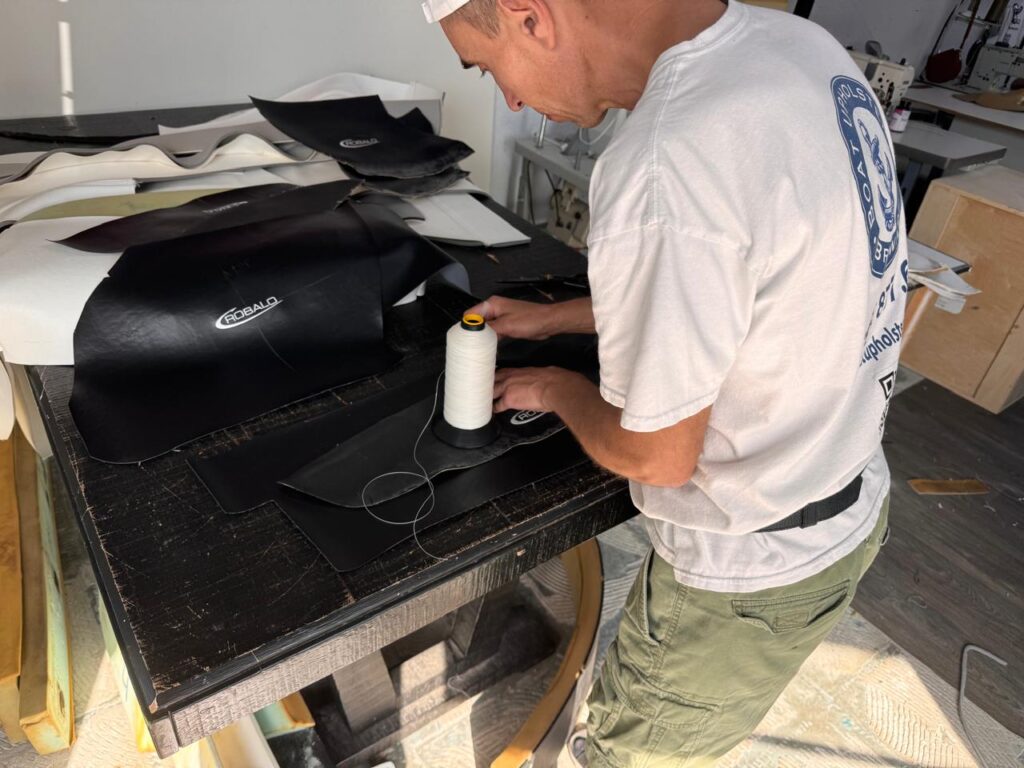
What Makes Robalo Upholstery Structurally Different
Robalo interiors look bold and solid. Compared to lighter brands, they feel heavier, more muscular, more “offshore-ready.” But behind that appearance there are engineering compromises.
Rear benches are typically thick and comfortable. Central bolsters are heat-molded into shape. Black accent panels dominate the layout. The aesthetic is strong.
The problem is not how they look when new. The problem is how they age.
And they age differently than most brands.
The Unique Seating Layout: Rear Bench vs Forward Passenger Seat
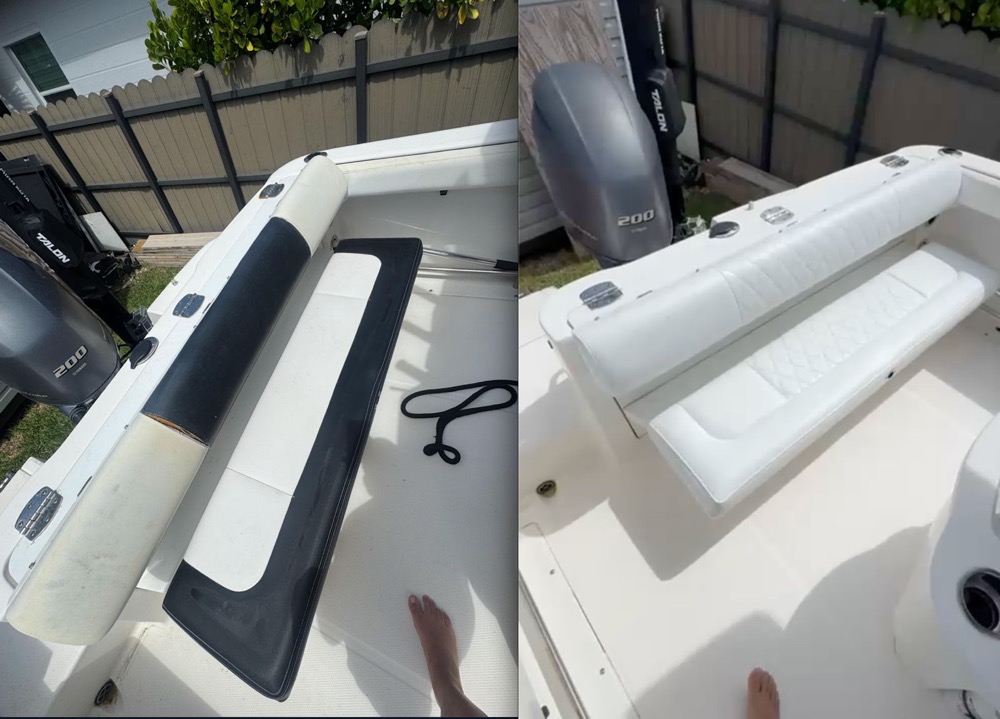
One detail that almost no one talks about is the imbalance between the rear bench and the forward passenger seat.
The rear bench is usually soft, well padded, and in many models foldable or retractable. It is designed to disappear when needed, creating fishing space in the cockpit. Because of this function, it is engineered with proper support and comfort.
But the forward passenger seat — the one facing the back of the console — is completely different.
It is fixed. It does not fold. And in most Robalo models, it is built with noticeably thinner foam.
That thin foam may help preserve walkway space, but on longer runs it becomes uncomfortable. Over time it compresses quickly and loses shape.
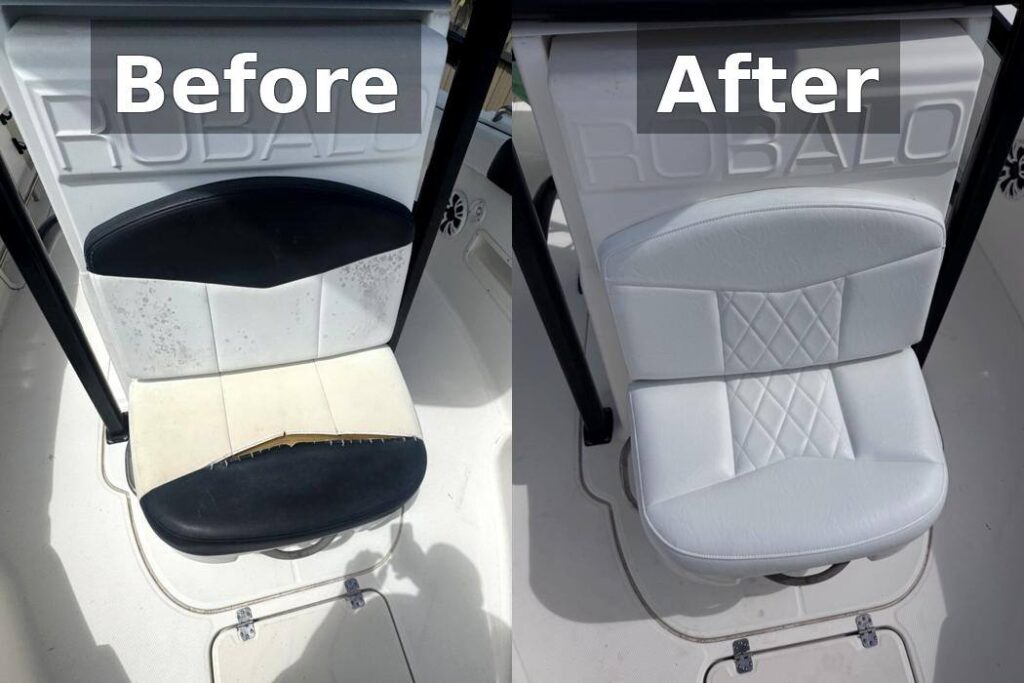
On almost every Robalo project, we increase the foam thickness in that front seat and reinforce it structurally. In many cases we also apply double diamond stitching there — not only for design, but for tension distribution and support.
Owners immediately feel the difference.
The Bow Bolster Problem (Critical Upgrade Point)
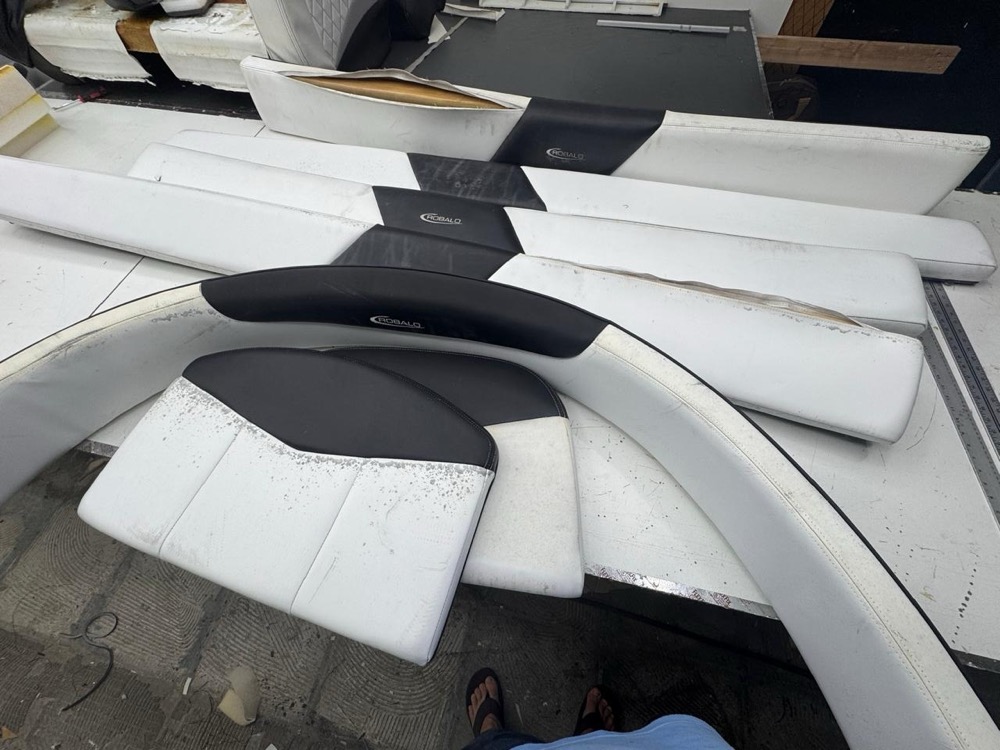
There is one more very specific weakness in Robalo construction — the forward bow bolster.
This front bolster has the most aggressive curve on the boat. To achieve that rounded shape from the factory, the foam is hot-pressed and heavily compressed.
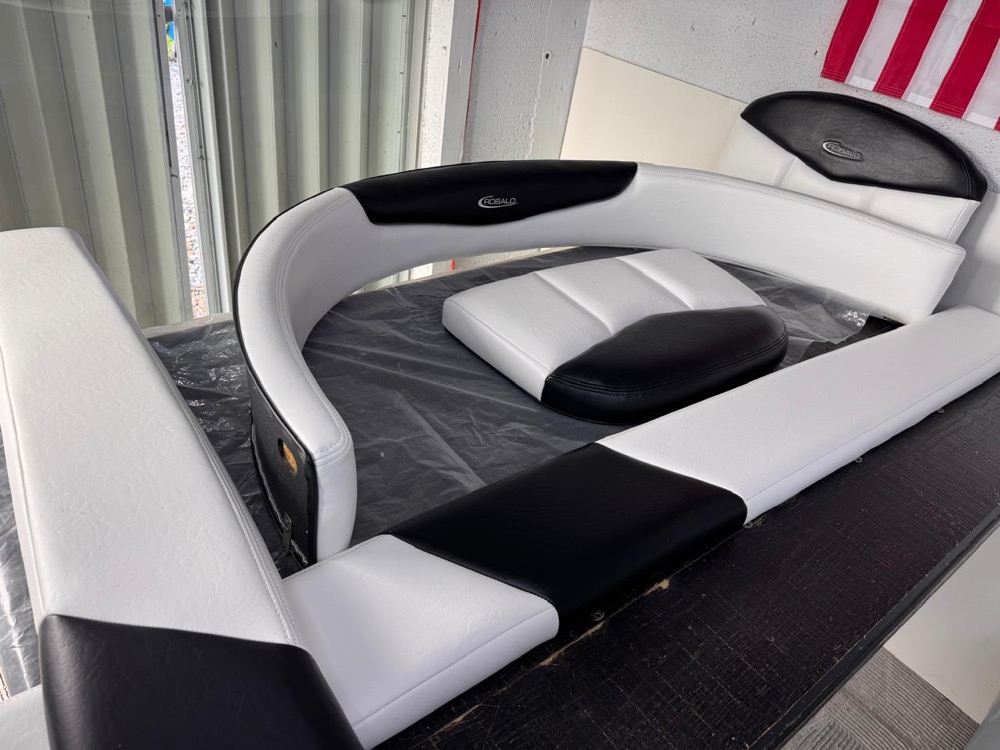
Because of that:
- The foam becomes over-densified.
- Certain layers behave almost like rubber.
- Drying performance becomes extremely poor.
And here’s the key issue:
The bow area is the wettest zone on the boat. It constantly receives spray, splashes, and condensation. That heavily compressed factory foam is the slowest to dry.
It stays damp longer than any other cushion on the boat.
For this reason, we often recommend — at minimum — replacing the bow bolster foam with Dry Fast marine foam. Dry Fast allows water to pass through and evaporate properly, eliminating chronic moisture retention.
Even if an owner chooses not to rebuild the entire interior, upgrading this specific bolster dramatically reduces mold risk.
Factory Foam Construction in Robalo Boats
Robalo uses hot-press molding to shape certain bolsters, especially central rounded sections. The foam is compressed under heat so it permanently holds a curved profile.
While effective for shaping, this process creates uneven internal density. Some layers become too tight. Airflow inside the foam decreases. When moisture enters, evaporation becomes slow.
In addition, most factory Robalo cushions are wrapped in protective plastic film. This wrap is meant to protect the foam core.
It works — temporarily.
But once stitching perforations, small vinyl cracks, or staple holes allow moisture inside, that same wrap traps the water instead of protecting the foam.
This is when long-term moisture problems begin.
The Black Vinyl & Mold Issue
Another recurring problem in Robalo upholstery is the heavy use of black vinyl accents.
Black vinyl in South Florida absorbs extreme heat. Over time, this accelerates surface cracking. Once cracking begins, water penetrates into the foam core.
Because of the wrapped and partially compressed foam structure, that water does not dry quickly.
The result is something many Robalo owners recognize:
Small black mold dots appearing on white panels.
These are not simple surface stains. They are signs of internal moisture retention and mold development inside the cushion core.
Where Robalo Upholstery Typically Fails
Instead of listing defects randomly, here is a structured comparison between factory construction and professional upgrade approach.
| Factory Condition | Typical Problem | Professional Upgrade |
| Forward passenger seat with thin foam | Early compression & discomfort | Increased thickness + structural reinforcement |
| Hot-pressed curved bolsters | Poor airflow & slow drying | Rebuilt with balanced density foam |
| Wrapped foam core | Moisture entrapment | Removal of wrap + breathable construction |
| Black vinyl accents | Heat cracking & water intrusion | Cool-touch lighter marine vinyl |
| Standard foam in bow bolster | Constant dampness | Replacement with Dry Fast marine foam |
This is not cosmetic correction. It is structural correction.
Our Structural Upgrade Philosophy
When we rebuild Robalo upholstery, we do not simply re-cover vinyl.
We remove compromised foam.
We eliminate plastic wrap barriers.
We rebalance density.
We improve drainage and breathability.
For forward passenger seating, we add support and comfort.
For central and bow bolsters, we correct airflow limitations.
For black-and-white interiors, we reduce heat load and mold risk.
The goal is long-term stability — not just appearance.
Why Robalo Interiors Need Engineering, Not Just Upholstery
Robalo hulls are strong and respected offshore. The boats themselves are solid. But the interior foam system is designed for production efficiency — not necessarily for long-term Florida humidity exposure.
If rebuilt intelligently, these interiors can last significantly longer than factory.
If simply re-covered without structural correction, problems return within a few seasons.
That difference is what separates cosmetic repair from true marine upholstery engineering.
For expert Robalo upholstery in Fort Lauderdale, explore Boat Upholstery Fort Lauderdale and request your personalized marine upholstery estimate today.