

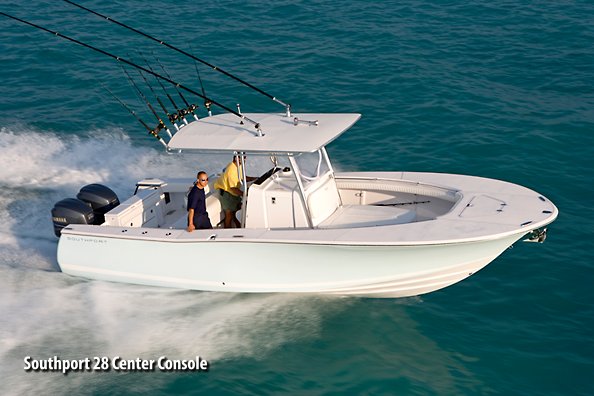
A Southport cockpit needs to work for more than one kind of day on the water. During a fishing trip, clear passageways, secure cushions and comfortable support matter. On a family outing, the same seating needs to remain comfortable through a longer ride.
When the upholstery starts showing its age, replacing the visible vinyl is only part of the decision. The foam, backing, mounting points and access beneath each cushion all affect the finished result. A cushion can look tired on top while its base is still usable, or look quite presentable while the support underneath has deteriorated. Looking at both layers helps you decide where the work will make a real difference.
At Boat Upholstery Fort Lauderdale, we look at planning upholstery work on older Southport 26 and 28 boats: what to inspect, what may be reusable, and how to update seating without losing the practical layout that makes the boat useful. The aim is to help you prepare for a conversation with an upholstery shop and understand the choices behind a quote. You do not need to decide on every material before that first inspection.
Start With the Exact Southport Model
Before ordering replacement cushions or discussing a custom upholstery project, identify the boat’s model, year and existing seating arrangement. Take note of any changes made by previous owners, especially replacement seats or altered mounting points. Those details can matter more to the pattern than the model name alone.
A Southport 26 center console and a Southport 28 may share familiar cockpit features, but their cushions should not be treated as interchangeable. A 28 Center Console, a 28 TE and a 28 Express also require separate attention to their individual layouts.
Contemporary reviews of the Southport 26 Center Console and Southport 28 CC provide useful context for understanding these older boats. For upholstery work, however, the boat in front of you remains the reference: previous owners may have changed seats, removed cushions or altered mounting hardware.
Begin with photographs of the entire cockpit, followed by close views of each upholstered section. Include the underside of removable cushions and the hardware that holds them in place. Photograph each piece in place before removing it, so its position and orientation remain clear. A wider view also shows the clearance around handles, lids and neighboring cushions.
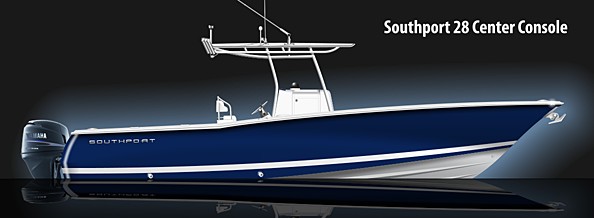
For current models and manufacturer enquiries, visit Southport Boats, the current manufacturer website. For historical context, the archived Southport Boatworks 28 CC page shows period model information. Archived details describe the boat at that time and should not be treated as current specifications or parts availability.
Southport 26 & 28: Owner and Used-Boat Buyer Checklist
Use this checklist when viewing a boat or planning upholstery work. It connects features described in period Southport reviews with checks you can make on the actual boat. Equipment and previous modifications vary, so confirm the arrangement on your particular model and year.
| Area and model reference | What to check on board | What the finding means for the project |
|---|---|---|
| 26 CC: forward seats over storage / fishboxes | With the owner’s permission, lift removable cushions and operate the lids. Check undersides, attachment points and whether the cushions obstruct opening or closing. | Record lid clearance before changing cushion thickness or shape. List missing cushions and damaged attachments separately from cover replacement. |
| 28 CC: padded forward box / lounge area | Check the complete pad, including its edges and underside. Test support while seated at the dock and confirm access to the box beneath it. | An uneven pad calls for foam assessment, not just a new cover. Preserve access to the box when planning a replacement pattern. |
| 26 / 28 CC: cockpit coaming bolsters | Gently check for loose sections, hard spots, split seams and wear near mounting points. Note clearance around rod holders and nearby openings. | Ask for cover, padding and mounting work to be itemized. Loose or deteriorated support needs assessment before it is covered again. |
| 26 / 28 CC: leaning-post seating and adjacent equipment | Try the existing support while stationary. Open accessible tackle storage and check access to the livewell or equipment around the assembly. | Describe the uncomfortable edge or position to the fabricator. Confirm that revised padding leaves handles, lids and service access usable. |
| Any model: missing or previously altered pieces | Compare the installed set with photographs of the same model and year where available. Photograph empty mounting locations and ask about previous changes. | A missing piece may require a new template and a fitting visit. Include that work in the scope; a photograph alone does not establish exact dimensions. |
| Any model: deciding between a local repair and a coordinated set | Compare the damaged piece with adjacent vinyl in daylight. Check whether deterioration is isolated or present across several sections. | Request separate scopes for the affected piece and a coordinated group if useful. Agree on an acceptable color match before authorizing fabrication. |
Record before you leave: model and year, an overall cockpit photograph, close views of each concern, and which pieces are missing or modified. Do not dismantle fixed panels during a viewing without permission. These are upholstery and access checks, not a substitute for a marine survey of the hull, systems and machinery.
Model-layout references: Southport 26 Center Console — Salt Water Sportsman; Southport 28 — Yachting; Southport 28 CC — Sport Fishing. Inspection guidance is provided by this independent upholstery guide. The model-specific rows describe center consoles, not the 28 Express.
Which Upholstery Areas Should You Inspect?
Depending on the model and its equipment, an inspection may include:
- Forward seating and removable bow cushions.
- The seat and backrest at the front of the console.
- Leaning-post padding and backrests.
- Cockpit coaming bolsters.
- Aft seating and removable seat sections.
These parts serve different purposes. A sitting cushion needs appropriate support under a person’s weight. A leaning-post pad supports a different posture. Coaming bolsters cushion the cockpit edge where someone may brace their legs while fishing.
Treating every piece as the same type of cushion can change how the boat feels and functions. The shape, firmness and thickness should suit the location. Compare how each piece feels in use before deciding to reproduce it exactly. A shape that looks right in a photograph may still need adjustment where a person sits or braces against it.
Coaming Bolsters and Cockpit Padding
Coaming bolsters—also called cockpit bolsters or gunwale pads—deserve particular attention on a fishing boat. These pads are part of the working edge of the cockpit, so assess them while standing where you would normally fish. Pay attention to the height and position of the support as well as the condition of the cover.
Look beyond surface discoloration. Check for splitting around seams, loose mounting points, flattened padding and damage underneath. A bolster may look acceptable from the dock while feeling hard or unstable when someone leans against it.
Before changing its thickness or profile, check nearby rod holders, storage openings and the space available for moving around the cockpit. Try the nearby hardware through its full range of movement while the original bolster is still fitted. That gives the fabricator a useful reference for what a replacement must clear.
Leaning-Post Seats and Backrests
Inspect a leaning-post cushion while using it in the positions you normally adopt underway. Check the leading edge, corners and areas around any seams. Notice whether the pressure feels even or whether you can feel a hard edge through the padding. Describe that experience when discussing the replacement, rather than asking only for a different thickness.
If the foam has collapsed or become uneven, a new cover alone will not restore the original support. If the backing or mounting arrangement has deteriorated, that also needs to be addressed before the piece is recovered.
Keep access to storage and equipment beneath the seat in mind throughout the project. Photograph the openings and any equipment that must remain reachable before the seat is removed. Check the same access again at fitting, particularly if the replacement padding has a different profile.
Repair the Cover or Replace the Cushion?
A small damaged area does not automatically mean that every upholstered piece needs replacement. Equally, an attractive new cover cannot correct a failing cushion underneath. It helps to separate a cosmetic concern from a support or attachment problem before choosing the repair. Otherwise, money spent on the outer cover may leave the original discomfort unresolved.
The right scope depends on several separate checks. Work through each component with the same questions, rather than judging the complete set from its most visible cushion. The following checks also make it easier to explain why one piece can be repaired while another needs more work.
Cover condition. Is the damage limited to one area, or is the material becoming brittle across the whole piece? Does it split when flexed? Are several seams failing?
Foam condition. Does the cushion recover its shape? Are there persistent damp areas, deterioration or a noticeable loss of support? Compare the center of the seat with areas that receive less weight, and note any unevenness. The inspection should also consider the underside, where the surface cover may conceal a problem.
Backing and attachments. Are the bases sound? Do fasteners hold securely? Is there damage around the mounting points? A cover pattern cannot compensate for a base that shifts or a fixing that no longer holds. Any necessary work to those parts should be identified in the scope before fabrication begins.
Appearance of adjacent pieces. A newly upholstered section may stand out beside older material. Consider the adjoining cushions before choosing the repair scope and color. Bring a neighboring piece or a clear daylight photograph when discussing a match. If an exact match is unavailable, consider whether a coordinated group of cushions would give a more consistent result.
A focused marine vinyl repair may make sense when the surrounding materials remain serviceable. More extensive replacement may be appropriate when deterioration affects several layers or multiple sections. Ask the shop to explain the condition of the parts it proposes to retain. That makes the choice between a limited repair and a broader renewal easier to assess.
Keep the Factory Layout or Customize It?
A useful starting point is to preserve what already works. Before choosing new stitching or colors, make a short list of what you like about the current seating and what you would change. That keeps the design discussion tied to actual use instead of appearance alone.
If the existing seating is comfortable and the cockpit functions well, updating materials while retaining the general shape may be enough. A custom project can also address specific concerns: an uncomfortable edge, insufficient support or a color combination the owner wants to change.
Before approving a new design, check that it preserves:
- Access to lockers, hatches and service areas.
- Clearance around hinges, handles and other hardware.
- Secure attachment of removable cushions.
- Comfortable movement around the console.
- The intended use of fishing and family seating areas.
A thicker cushion is not automatically a better cushion. It can change sitting height, reduce clearance beneath a backrest or interfere with a nearby opening. Evaluate the complete assembly rather than selecting thickness in isolation.
For an older Southport, a restrained update can retain the character of the cockpit while making the seating more comfortable and easier to maintain. Keep photographs of the original arrangement as a reference during the project. They can help resolve questions about panel divisions, cushion positions and the relationship between neighboring pieces.
Choosing Materials for South Florida Use
Material selection should account for exposure, storage and how the boat is used. Explain where the boat is kept and what happens to the cushions after a trip. Those everyday details help narrow down a suitable construction and maintenance approach.
A boat kept uncovered faces different conditions from one stored under a fitted cover. A removable bow cushion that is put away after each trip has a different exposure pattern from a bolster that stays installed.
Marine Upholstery Vinyl
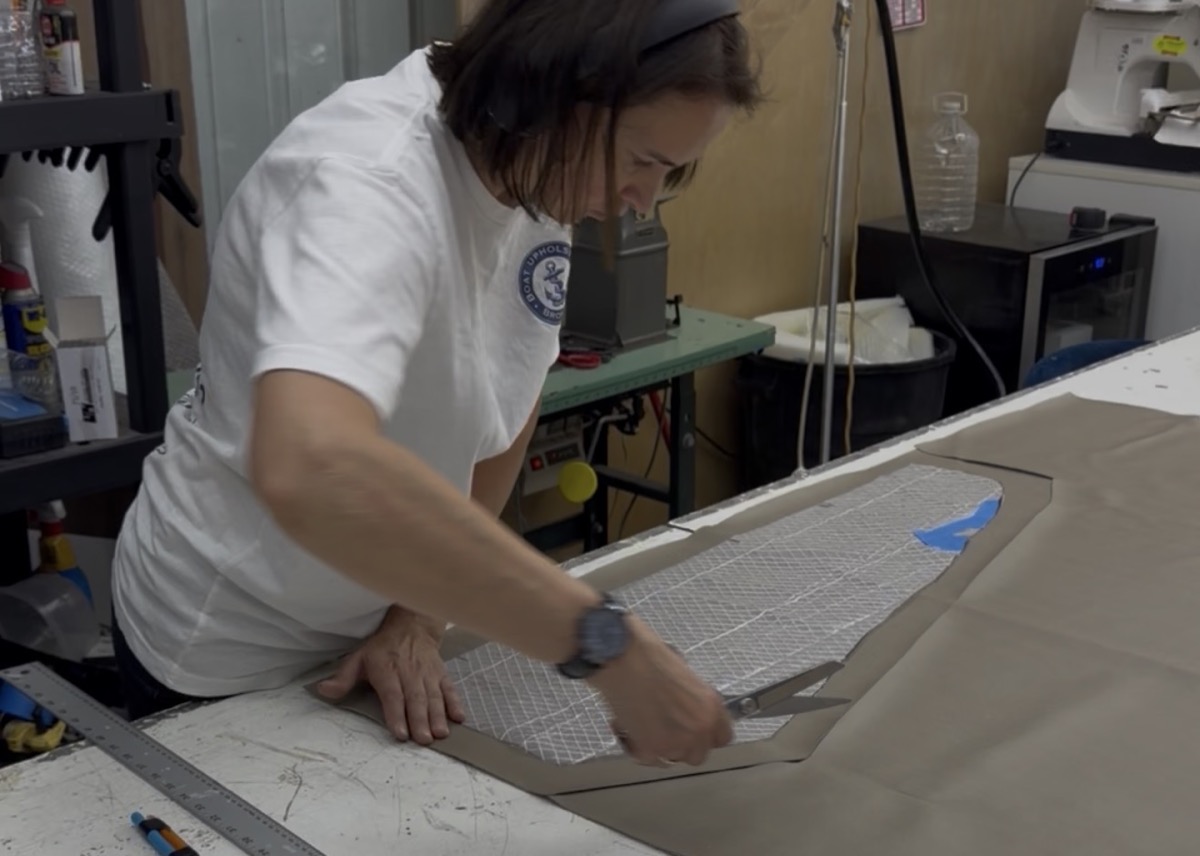
Review the actual product specifications and care instructions when comparing marine vinyl. Consider its intended application, cleaning requirements, surface texture and available colors. Ask to see a sample large enough to judge both its feel and its appearance. Discuss the particular product being quoted so that the material choice is clear before work starts.
Compare physical samples on the boat when possible. A color viewed indoors may look different beside the existing gelcoat in daylight. Place the samples beside more than one upholstered area and look at them from normal seating positions. If only part of the set is being renewed, assess the transition to the pieces that will remain.
Cushion Foam
Foam selection should reflect the cushion’s purpose and construction, including how moisture can enter and leave the assembly. Discuss whether a piece stays installed or is routinely removed, and show how it sits against its base. That context is useful when deciding on the complete cushion construction.
Ask how the proposed foam will perform in that particular seat or bolster. There is no single foam choice that should automatically be used throughout every cockpit. Describe where you want firmer support and where the current cushion feels uncomfortable. Physical samples can make that conversation more useful than choosing from a density or thickness figure alone.
Reusing existing foam should follow an inspection, rather than being assumed as a way to reduce the quote. Ask which pieces have been inspected and whether the quote allows for replacement if hidden damage is found. Agreeing on that possibility early avoids treating a provisional assumption as a final decision.
Thread, Backing and Hardware
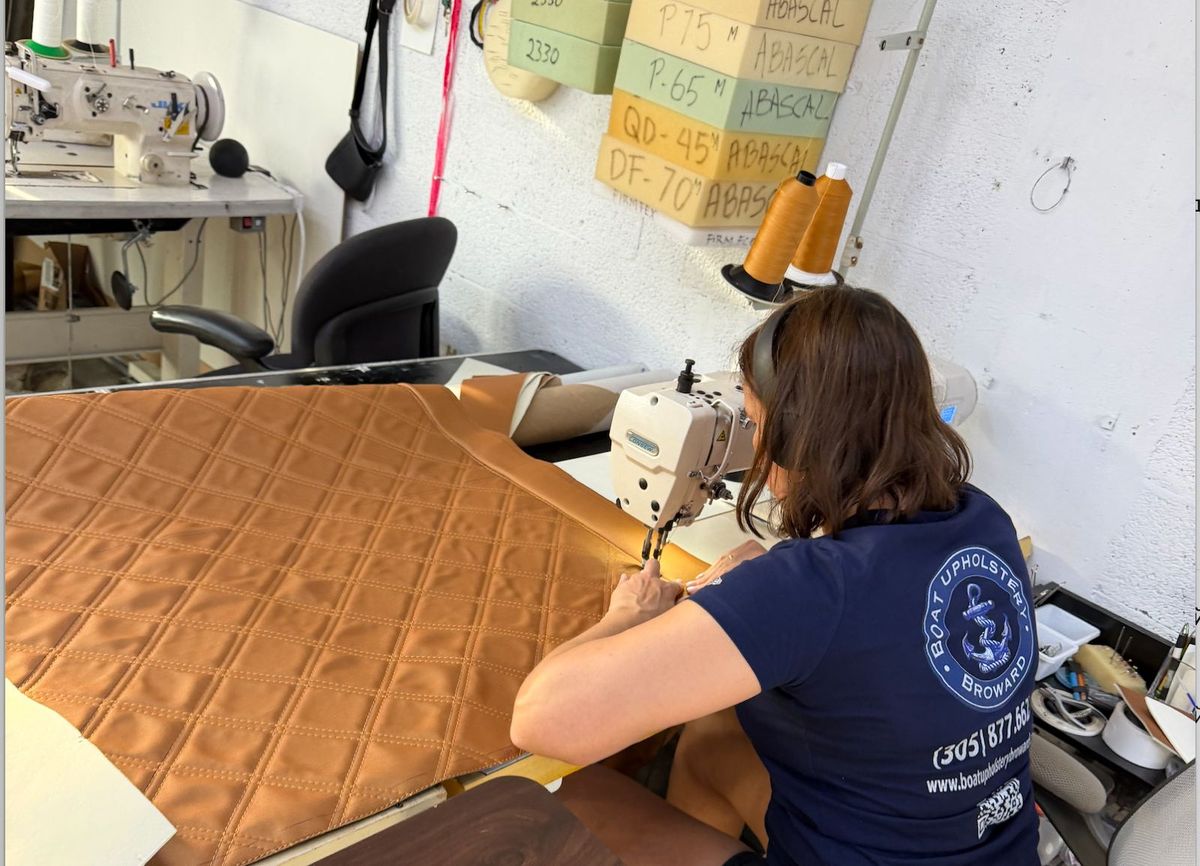
Ask what is included beyond the visible cover. Thread, backing, attachment details and the condition of existing hardware all influence the finished assembly. Ask the shop to distinguish new components from those being retained. A clear description helps you compare quotes that may otherwise look similar on price.
Where an existing part is being retained, its condition should be checked before it becomes the foundation for new upholstery. In particular, check the areas around fasteners and the edges that carry the cover. If those areas need attention, resolve that before the new material is fitted over them.
Buying a Used Southport? Check the Upholstery Closely
If you are comparing used Southport boats for sale, upholstery condition can help you plan the work required after purchase. A complete set of cushions in usable condition is a different starting point from a boat with missing backrests or altered seats. Record those differences when comparing the work each boat may require.
Ask to see the boat with removable cushions lifted. Examine the underside, backing and mounting points, rather than relying only on listing photographs. Request close views of the areas that are hidden when everything is installed. If you cannot inspect the boat in person, treat photographs as an initial reference rather than a complete condition assessment.
During a viewing:
- Sit on each seating area and check support.
- Examine seams, corners and attachment points.
- Lift removable cushions with the owner’s permission.
- Look for persistent moisture or deterioration underneath.
- Confirm that cushions and backrests are present and secure.
- Check whether upholstery obstructs access to storage or equipment.
Missing pieces can complicate a replacement project because there may be no original cushion available to use as a reference. Photographs, mounting locations and measurements then become especially important. Ask whether the seller has older photographs showing the missing part in place. Even when those images are available, the replacement still needs to be checked against the boat’s current dimensions and attachments.
An upholstery inspection helps establish the seating work required. It is a separate task from assessing the boat’s structural and mechanical condition. Keep a separate list of seating issues for the upholstery shop and wider questions for the person assessing the boat. That prevents an attractive interior from becoming a substitute for a broader inspection.
What Affects Boat Upholstery Cost?
There is no reliable single price for reupholstering every Southport 26 or 28. Two boats of the same model can require very different amounts of work. A boat needing a few sound cushions recovered is a different project from one needing new foam, bases and missing pieces made. An initial estimate becomes more meaningful once those differences are established.
The quote depends on the number and size of pieces, their condition and the proposed finish. Curved bolsters, shaped backrests, multiple materials and detailed stitching can also affect the work involved.
Other questions include whether the existing foam can be retained, whether bases need attention, and whether the pieces can be removed for workshop work. Show how the pieces are attached and explain any restrictions on access to the boat. The quote should account for how the actual work will be carried out, not just the visible size of the cushions.
For a useful comparison between quotes, confirm what each one includes:
- Covers only, or foam and backing as well.
- Removal and installation.
- Hardware replacement where required.
- Material selection and design details.
- Fitting and any necessary adjustments.
Clear scope makes the price easier to understand and reduces uncertainty once work begins. Keep the agreed materials, retained parts and design details together with the quote. If the scope changes after inspection, ask for those changes to be recorded before the additional work proceeds.
Preparing for an Upholstery Project in Fort Lauderdale
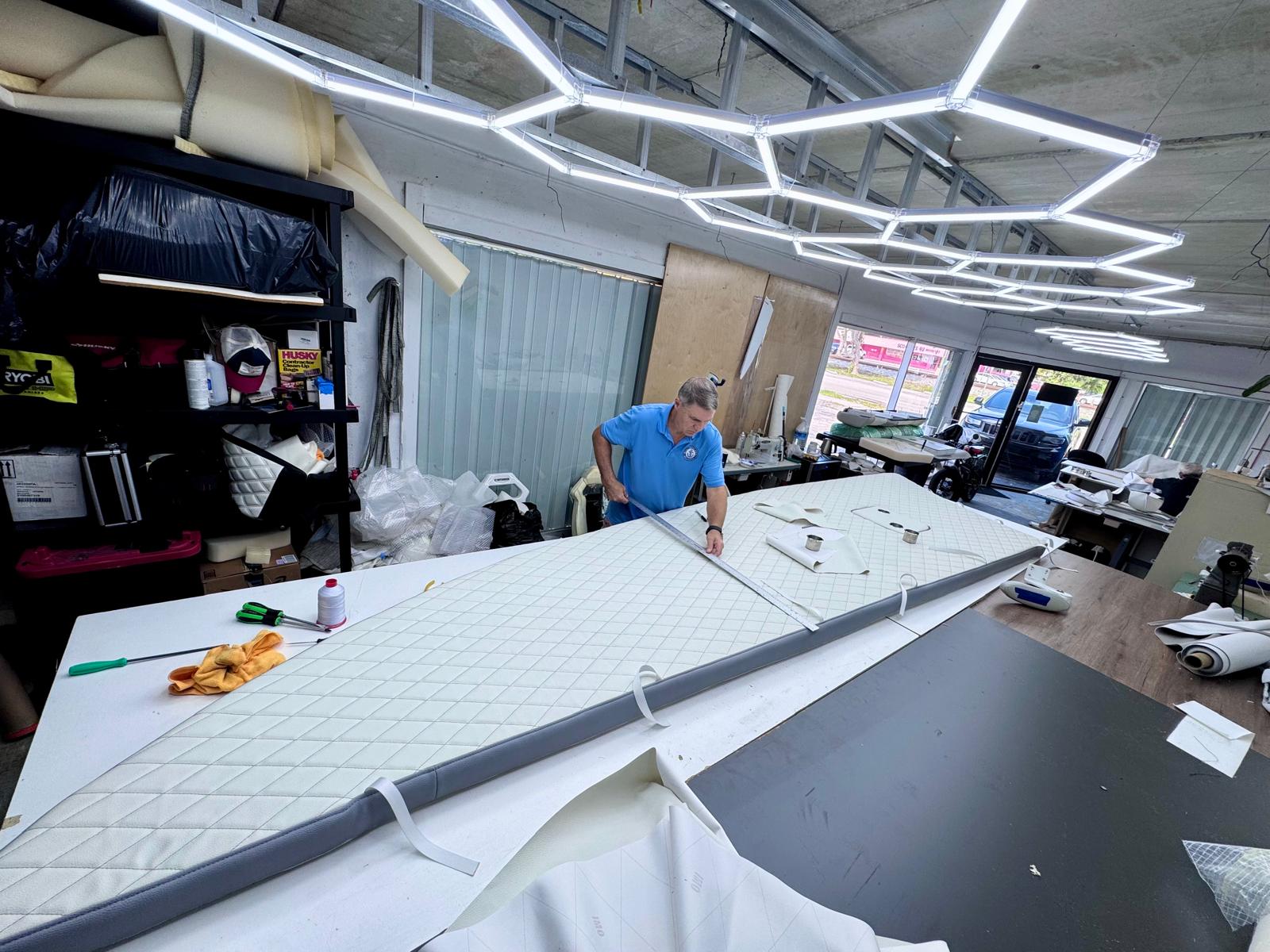
The workshop photographs in this guide show fabrication work carried out at the Boat Upholstery Broward workshop, where sewing for Boat Upholstery Fort Lauderdale projects is performed. This explains the Broward branding visible on workwear. The photographs illustrate our working process and are not presented as a completed Southport commission.
For boat seat upholstery in Fort Lauderdale on a Southport, start with a concise description of the boat and the work you want to discuss. Explain how you use the cockpit and which parts bother you most at present. That helps the first discussion focus on the work you need rather than a generic replacement package.
Include the model, year, location and clear photographs. Explain whether the priority is repairing one section, renewing a complete set or changing the seating’s appearance and support. If any cushions are missing, show the empty location and its attachment points. Mention previous changes to the seating so that the shop knows which parts may no longer match the original arrangement.
The next steps should establish the condition of the existing pieces, measurements, material choices and the agreed design. Before fabrication, clarify which parts will be reused and which will be replaced.
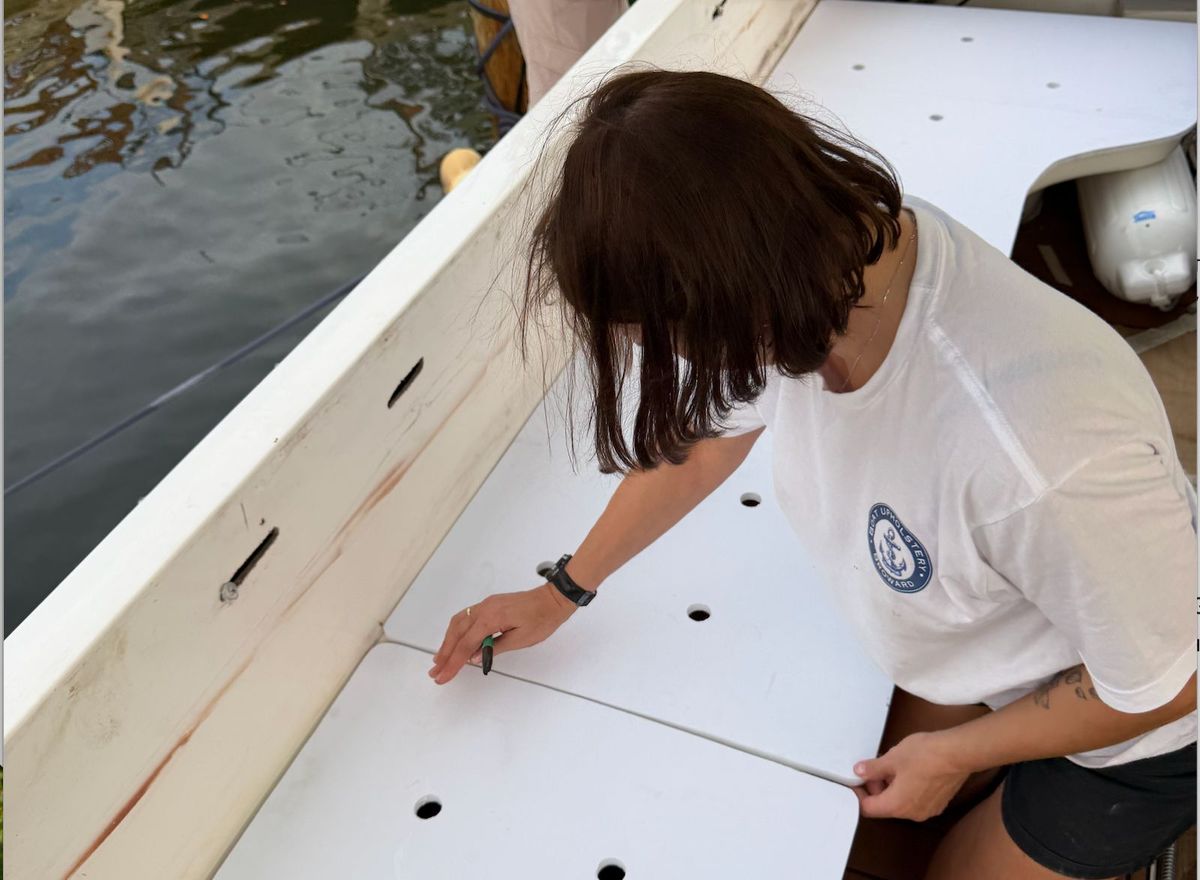
During fitting, check more than appearance. Confirm that cushions sit correctly, removable pieces attach securely and hatches still open as intended. Open the adjacent lockers and try the seating in its normal positions before the fitting is considered complete. A small clearance issue is easier to identify with the boat and all its components together.
The objective is a cockpit that continues to work well for the way you use the boat. Use that as the final check when reviewing the finished project: can you sit comfortably, move through the cockpit and reach the equipment you need? The appearance should support those practical requirements.
Looking After the Finished Upholstery
Follow the selected material manufacturer’s cleaning and care instructions. Keep the product information provided with the job so you can refer to the correct guidance later. Different materials and finishes may call for different care, even when they look similar.
Use the recommended cleaning products and methods, and check their guidance before applying protectants or stronger cleaners. Address spills promptly and pay attention to moisture beneath removable pieces.
Inspect attachment points and seams periodically. Small problems are easier to assess before they affect a larger section. Lift removable pieces when appropriate and look at the areas you do not normally see. If something has loosened or begun to wear, photograph it and ask the shop to assess it before attempting a repair.
If a boat cover is part of the storage arrangement, check its fit after any significant change to cushion shape or seat height. Check for places where the cover now pulls tightly across a raised edge or no longer reaches its usual fixing. Resolve the fit with the cover supplier rather than forcing it over the changed seating.
Southport Upholstery Questions
Can one damaged bolster be repaired without replacing the full set?
Possibly. The decision depends on the condition of the surrounding cover, foam, backing and attachments. Matching an aged material can also be difficult, so compare the repaired section with neighboring pieces before agreeing on the scope. It is also worth checking whether the damage is isolated or part of a wider pattern of wear. If several neighboring bolsters are beginning to fail, compare the limited repair with renewing that group together.
Can the original cushion foam be reused?
Sometimes. It should be checked for support, deterioration and persistent moisture. Keeping foam that no longer performs well can limit the benefit of a new cover. Foam that still looks complete may feel uneven once someone sits on it, so appearance alone is not enough. Ask for each piece to be assessed and have the quote state which foam is being retained.
Can replacement upholstery retain the original shape?
That can be the aim when suitable reference pieces are available. Existing cushions, mounting points and measurements help establish the shape. Missing or previously modified pieces require additional assessment. Tell the fabricator which details you want to preserve, such as the panel divisions or the relationship between a seat and its backrest. If you also want a change in comfort, discuss how that can be accommodated within the familiar outline.
Can new cushions be made from photographs alone?
Photographs are useful for an initial discussion, but they may not provide enough information for fabrication. Measurements, templates or access to the boat may still be needed. Curves, attachment positions and clearances can be difficult to judge accurately from a single image. Use photographs to establish the scope, then agree on how the final pattern and fit will be confirmed.
Can colors and stitching be changed?
Discuss the proposed design alongside physical material samples. Consider how it will look with the gelcoat, existing seating and the rest of the cockpit. Look at the samples in daylight and compare them with any pieces that will stay on the boat. Agree on the panel layout and stitching details before fabrication so that both sides are working from the same design.
What should I send when requesting a quote?
Send the model and year, the boat’s location, an overall cockpit view and clear photographs of each affected piece. Include close views of the damage and the underside where accessible. Where possible, add a photograph showing the fastening method and one showing the complete seating arrangement. A short explanation of what you want to retain or change will make the photographs much easier to interpret.
Discuss Your Southport Upholstery Project
Planning to refresh the seating, cushions or coaming bolsters on a Southport 26 or 28?
Contact Boat Upholstery Fort Lauderdale with photographs and a description of the work you have in mind. Identify the pieces you want assessed and whether your priority is repair, replacement or a coordinated cockpit update.
This is an independent upholstery guide. Southport model names identify the boats discussed and do not imply manufacturer affiliation.